
Your brain has needs. Most of us have never been told what they are.
Mental health and brain health are the same conversation. Understanding what your brain needs — and what harms it — is the most powerful thing you can do for your mental health and your children's.
The Basics
The brain is an organ. It responds to how you treat it.
We talk about mental health constantly. We talk about brain health almost never. But they are not separate things.
Think about it this way. If someone asked you what the heart needs to stay healthy, most people could answer: eat well, move regularly, don't smoke. We know this because we've been told — clearly, repeatedly, for decades.
Nobody has ever had that conversation with us about the brain. And the brain is an organ just like the heart. It needs the right fuel. It needs regular movement. It needs rest. It needs genuine human connection. When it gets those things, it functions well. When it doesn't, it struggles — and that struggle shows up as anxiety, depression, poor sleep, inability to concentrate, and a reduced ability to cope with the ordinary difficulties of life.
That is not weakness. It is biology. And biology, once you understand it, gives you something to work with.

What the Brain Needs
Four things. Simple to understand, powerful in practice.
The research is now very clear. There are four things that have the greatest influence on brain health and mental health. They are not complicated. But most Australians have never been told just how powerful they are.
Real food
The brain uses about 20% of the body's energy, despite being only 2% of its weight. What you feed it matters enormously. Food that comes from the ground, from animals, from trees — vegetables, fruit, meat, fish, eggs, nuts, wholegrains — gives the brain what it needs to function, regulate mood, and protect itself from inflammation. Ultra-processed food — the packaged, manufactured products that make up an increasing proportion of the Australian diet — does the opposite.
Movement
Exercise is one of the most powerful things a human being can do for their brain. It helps the brain grow new connections, reduces inflammation, regulates the body's stress response, and improves sleep. Research consistently shows that regular movement is as effective as antidepressant medication for mild to moderate depression — with none of the side effects. The brain was designed to move. When we stop, it suffers.
Sleep
Sleep is not downtime. It is the brain's primary repair and maintenance window. During sleep the brain consolidates memory, clears out waste products that build up during the day, regulates emotion, and restores the systems that help us manage stress and make good decisions. Chronic poor sleep is one of the most reliable ways to damage mental health — and one of the most reliably ignored.
Genuine human connection
The human brain is a social organ. It developed over hundreds of thousands of years in close-knit communities where connection, belonging, and shared purpose were essential to survival. Loneliness and social isolation are now recognised as significant risk factors for poor mental health — as damaging, some researchers suggest, as smoking. Meaningful relationships and a sense of community are not luxuries. They are needs.
Something Important To Understand
Some of what's harming your brain was designed to.
This is not about blame. It is about being informed.
Ultra-processed food is not accidentally hard to stop eating. Food companies employ scientists whose job is to find the precise combination of sugar, salt and fat that overrides the brain's natural signal that says "I've had enough." The industry has a name for it: the bliss point. These products are engineered in laboratories to make you want more. Understanding that is not a reason to feel ashamed of finding them hard to resist. It is a reason to see them clearly for what they are.
Social media platforms are not accidentally hard to put down. They are built using the same psychological principles as poker machines — variable rewards, infinite scroll, notifications timed to arrive just as you were about to stop. Teams of behavioural scientists are employed specifically to keep you on the platform longer. This is not an accident or a side effect. It is the business model.
Both industries are extraordinarily profitable. Both depend on your continued consumption. And both operate most effectively on brains that are tired, poorly nourished, and disconnected from other people.
Once you understand what is happening, you are in a much stronger position to make different choices — for yourself, and for your children.
How They Interact
These four things don't work in isolation. They form a system.
Food, movement, sleep and screen use don't just each affect the brain separately. They affect each other — and when they go wrong together, they can lock a person into a cycle that is very hard to break from the inside.
Poor sleep → worse food choices
When you haven't slept well, your brain sends much stronger signals for sugary, fatty, high-energy food. It's not a lack of willpower. It's your brain trying to compensate for low energy any way it can. Ultra-processed food is the easiest answer it finds.
Screens at night → worse sleep
The light from screens in the evening tells the brain it's still daytime, suppressing the signal that it's time to wind down. But it goes further — the stimulation of social media keeps the brain alert and emotionally activated at exactly the time it needs to be calming down.
Poor food → less benefit from exercise
Exercise helps the brain grow and repair. But a diet high in ultra-processed food causes inflammation that interferes with exactly that process. Your brain is trying to respond to the movement — but the food is getting in the way of the benefit.
Poor food → worse sleep
Ultra-processed food disrupts the gut, and the gut plays a major role in producing the chemicals the brain uses to regulate sleep. A diet high in manufactured food makes it harder to fall asleep, harder to stay asleep, and reduces the quality of the sleep you do get.
Poor sleep → harder to put screens down
A tired brain struggles to resist things it knows aren't good for it. The part of the brain responsible for saying "enough, put it down" is running on empty. And the apps are designed to take advantage of exactly that vulnerability.
Movement breaks the cycle
Regular movement improves sleep quality, reduces cravings for poor food, strengthens the brain's ability to resist the pull of screens, and directly counters the inflammation caused by ultra-processed food. It sits at the centre of the whole system — the single most powerful lever most people have access to.
None of these connections are coincidences. They reflect the fact that the brain is a single, integrated system — and that the four things most likely to harm it are themselves connected. The food industry and the tech industry both profit most when people are tired, eating poorly, and spending less time moving and connecting with each other. The cycles they create are not accidents.
But cycles can be broken. And understanding how they work is the first step.
The Prenatal To 25 Window
From before birth to age 25 — why timing matters more than most people realise.
The brain is not fully formed at birth. In fact it isn't fully formed until around the age of 25. During that entire window — from the earliest days of pregnancy through to young adulthood — the brain is actively building itself. What it is exposed to during this period doesn't just affect how a young person feels right now. It shapes the brain they will carry for the rest of their life.
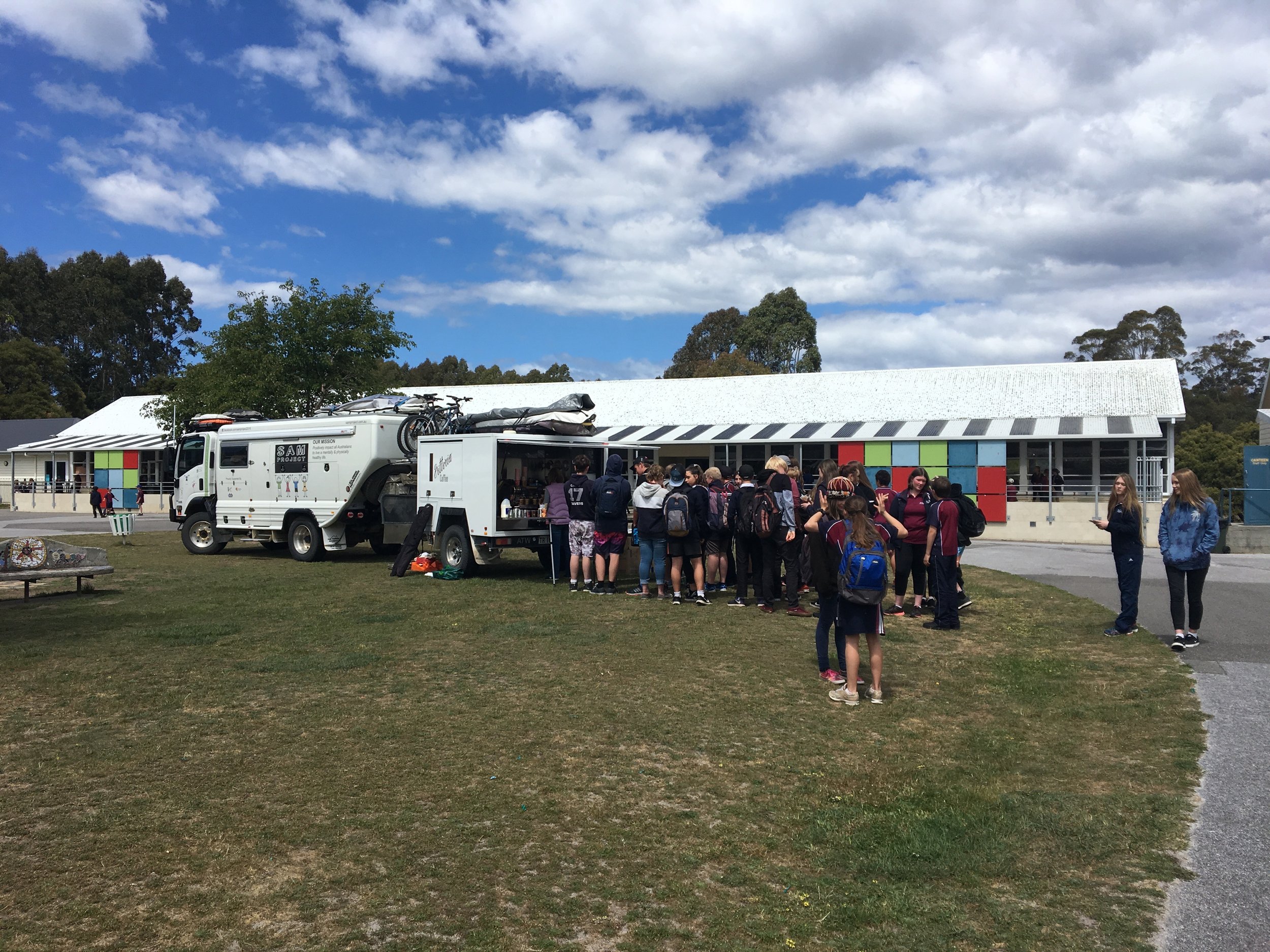
This is the most important thing the Sam Project wants every Australian parent, grandparent, teacher and community member to understand.
1 Before birth — the prenatal period
Conception to birth
Most people have never considered that what a mother eats during pregnancy directly shapes her baby's brain development before the child is even born. But it does.
The gut and the brain are connected by a communication highway that develops very early in pregnancy. What a mother eats influences that connection — including how the developing baby's brain will later respond to stress, regulate emotion, and process the world. A diet rich in whole foods during pregnancy supports healthy brain development. A diet high in ultra-processed food can compromise it — before the child has drawn their first breath.
This is not said to create anxiety for mothers. It is said because this information exists, it is important, and almost no one has shared it in plain language. Knowing it gives families something they can act on.
2 Early childhood
Birth to around age 7
In the first years of life the brain is forming connections at an extraordinary rate — more rapidly than at any other point after birth. The experiences a young child has, the food they eat, the sleep they get, the movement they do, and the quality of the relationships around them all contribute directly to how those connections form.
Sleep is especially critical at this stage. Young children who consistently sleep poorly are more likely to struggle with emotional regulation, attention, and behaviour — not because of who they are, but because their brain has not had the repair and consolidation time it needs.
Screen exposure in very young children is a growing concern not because screens are evil, but because the time spent in front of a screen is time not spent in movement, face-to-face conversation, outdoor play, and the experiences that build the brain most effectively at this age.
3 Adolescence
Roughly ages 12 to 18
Adolescence is the second great period of rapid brain development — and in some ways the most vulnerable. The parts of the brain responsible for reward-seeking and emotional intensity develop earlier in adolescence than the parts responsible for self-regulation, judgement, and resisting impulse. This is not a character flaw. It is the normal sequence of brain development.
But it means that the adolescent brain is, by its very nature, more drawn to novelty, more sensitive to social acceptance and rejection, and less equipped to resist things that feel good in the moment but aren't good in the long run.
Social media platforms are specifically engineered to exploit exactly these characteristics. The reward of a like, the anxiety of being left out, the pull of the next video — these hit an adolescent brain with a force that most adults significantly underestimate, because their own brain's regulatory systems are more developed.
Diet, sleep and movement are all particularly influential during adolescence. The teenage years are also when most mental illness first appears — which makes this window the most important opportunity for genuine prevention.
4 Young adulthood
Ages 18 to 25
The brain continues developing until around age 25 — something that surprises most people, because by 18 we typically treat young people as fully formed adults. Legally and socially they are. Neurologically, the process is still underway.
The final systems to mature are those responsible for long-term planning, consequence assessment, and impulse control. This is why the late teens and early twenties remain a period of real vulnerability — to addiction, to mental illness, and to the compounding effects of poor sleep, poor diet, and heavy screen use.
It is also a period of enormous opportunity. Habits formed in this window — around food, movement, sleep, and how technology is used — tend to persist. Building good ones now has lifelong consequences.
What You Can Do
This is not about perfection. It is about direction. Every small change in the right direction has a real effect — on your brain, and on the brains of the children watching you.
🥦 Move toward real food, away from manufactured food. You don't need to read nutrition labels or count anything. A simple rule: if it came from the ground, an animal, a tree, or the sea — it's real food. If it was made in a factory and comes in a packet with a long list of ingredients — eat less of it. Direction matters more than perfection.
🚶 Move your body every day. It doesn't need to be a gym. Walking, swimming, cycling, gardening, kicking a ball — any sustained movement counts. Aim for at least 30 minutes most days. Think of it not as exercise but as looking after the organ between your ears.
😴 Protect your sleep — and your children's. Keep screens out of the bedroom. Set a consistent time to wind down. Understand that a child or teenager using a phone in bed at night is not just tired the next day — they are missing the brain's repair window, repeatedly, at the most critical time of their development.
📱 Use technology — don't let it use you. Social media platforms are designed to be hard to put down. Knowing that changes your relationship with them. Set limits. Charge phones outside the bedroom. Have device-free times at the dinner table. Model for your children the relationship with technology you want them to have.
🤝 Invest in face-to-face connection. A conversation over a meal, a walk with a friend, a community group, a shared meal — these are not soft options. They are meeting a genuine biological need. The brain that is well connected to other people is more resilient, more able to cope, and more protected against mental illness.
👶 If you are pregnant or planning to be — this matters now. What you eat during pregnancy, how you sleep, and how much you move all influence your baby's developing brain. This is not about added pressure. It is about knowing that the choices you make now are among the most powerful ones you will ever make for your child's future mental health.
Practical steps that make a real difference.
The children in your life are watching. The habits they will carry into adulthood are being formed right now — by what they see at home, what they are fed, how much they move, how much they sleep, and what their relationship with technology looks like. You don't have to be perfect. You just have to be heading in the right direction. That is enough to make a difference.
Go Deeper
Watch the Transparency Series
The Sam Project's free 14-part video series covers all of this in detail — the evidence, the system, and what genuine prevention looks like. Start wherever feels most relevant to you.